 Image 1 of 3
 Image 2 of 3
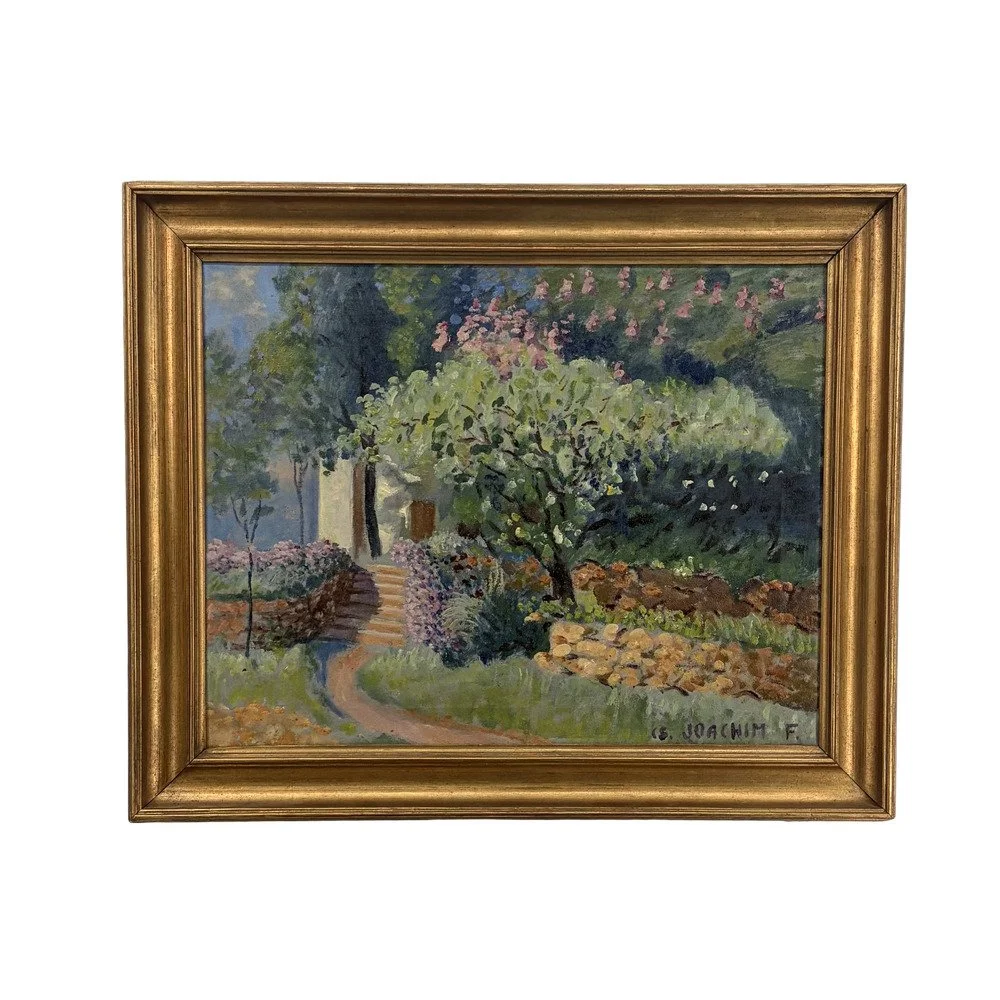 Image 3 of 3
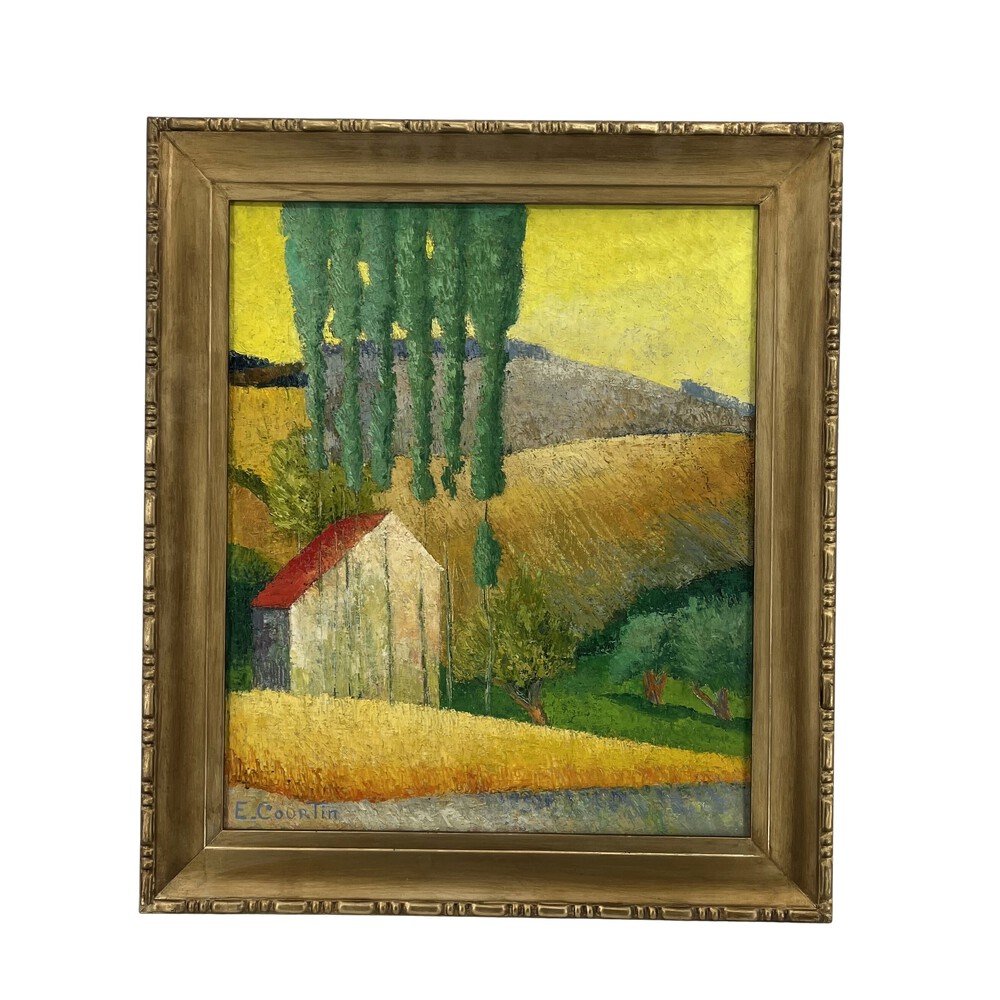
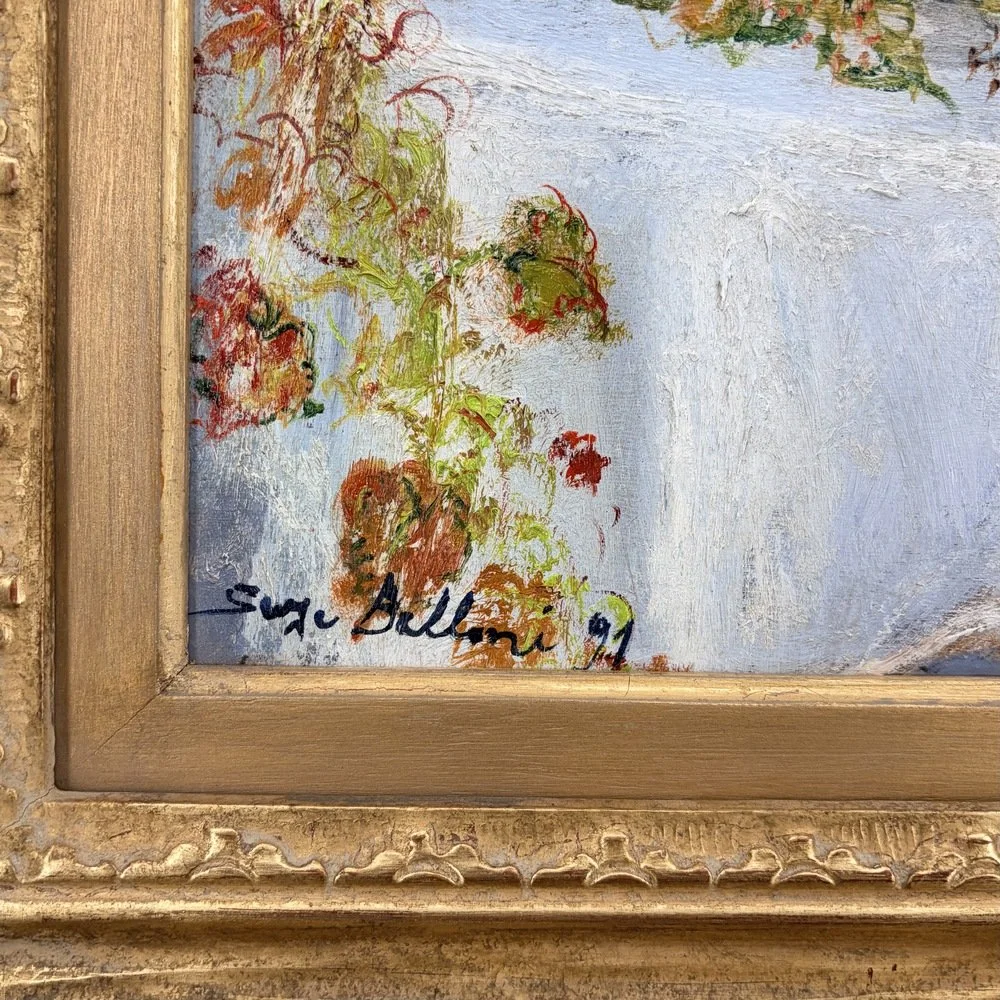
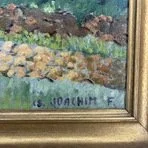
This luminous Post-Impressionist oil on board, Hungarian Post-Impressionist Gardens, is by Ferenc Joachim (1882–1964), one of Hungary’s notable early 20th-century painters. Signed lower right and presented in its original frame, the painting reflects Joachim’s remarkable sensitivity to color, light, and the atmosphere of a garden in full bloom.Born in Szeged, Hungary, Joachim studied and painted in Budapest before continuing his artistic education and travels through Vienna, Munich, Paris, and other European centers. His work developed from Impressionism and Neo-Impressionism, with a distinctly personal interest in color and the changing effects of natural light. He was an advocate of painting directly from nature, a practice that became particularly important during his travels through Western Europe. Joachim painted extensively in Rome, Venice, Marseille, and the south of France, as well as throughout Hungary. His work was exhibited internationally in Paris, Rome, Venice, Berlin, and Munich.A memorable chapter in Joachim’s career came in 1925, when he held a solo exhibition at the Lipótvárosi Casino in Budapest that received contemporary critical attention. A 1910 report from Szeged's annual spring exhibition described Joachim as the most modern of the participating artists and praised his exceptional sensitivity to color.Gardens and landscapes were an important part of Joachim’s artistic vocabulary, allowing him to explore the relationship between sunlight, foliage, flowers, and atmosphere. His paintings are distinguished by a confident use of color and a lively surface that brings the viewer into the scene rather than simply describing it. This work is a particularly appealing example of his Post-Impressionist approach, balancing the freshness of a garden subject with the sophistication of European modern painting.With its intimate scale, original frame, and vibrant natural palette, Hungarian Post-Impressionist Gardens would bring warmth and European character to a transitional, traditional, or contemporary interior. Designers will appreciate its ability to introduce color without overwhelming a carefully curated space. Measurements 24”x20” with frame, 19”x 15” without frame. Condition: Good
This luminous Post-Impressionist oil on board, Hungarian Post-Impressionist Gardens, is by Ferenc Joachim (1882–1964), one of Hungary’s notable early 20th-century painters. Signed lower right and presented in its original frame, the painting reflects Joachim’s remarkable sensitivity to color, light, and the atmosphere of a garden in full bloom.Born in Szeged, Hungary, Joachim studied and painted in Budapest before continuing his artistic education and travels through Vienna, Munich, Paris, and other European centers. His work developed from Impressionism and Neo-Impressionism, with a distinctly personal interest in color and the changing effects of natural light. He was an advocate of painting directly from nature, a practice that became particularly important during his travels through Western Europe. Joachim painted extensively in Rome, Venice, Marseille, and the south of France, as well as throughout Hungary. His work was exhibited internationally in Paris, Rome, Venice, Berlin, and Munich.A memorable chapter in Joachim’s career came in 1925, when he held a solo exhibition at the Lipótvárosi Casino in Budapest that received contemporary critical attention. A 1910 report from Szeged's annual spring exhibition described Joachim as the most modern of the participating artists and praised his exceptional sensitivity to color.Gardens and landscapes were an important part of Joachim’s artistic vocabulary, allowing him to explore the relationship between sunlight, foliage, flowers, and atmosphere. His paintings are distinguished by a confident use of color and a lively surface that brings the viewer into the scene rather than simply describing it. This work is a particularly appealing example of his Post-Impressionist approach, balancing the freshness of a garden subject with the sophistication of European modern painting.With its intimate scale, original frame, and vibrant natural palette, Hungarian Post-Impressionist Gardens would bring warmth and European character to a transitional, traditional, or contemporary interior. Designers will appreciate its ability to introduce color without overwhelming a carefully curated space. Measurements 24”x20” with frame, 19”x 15” without frame. Condition: Good