 Image 1 of 3
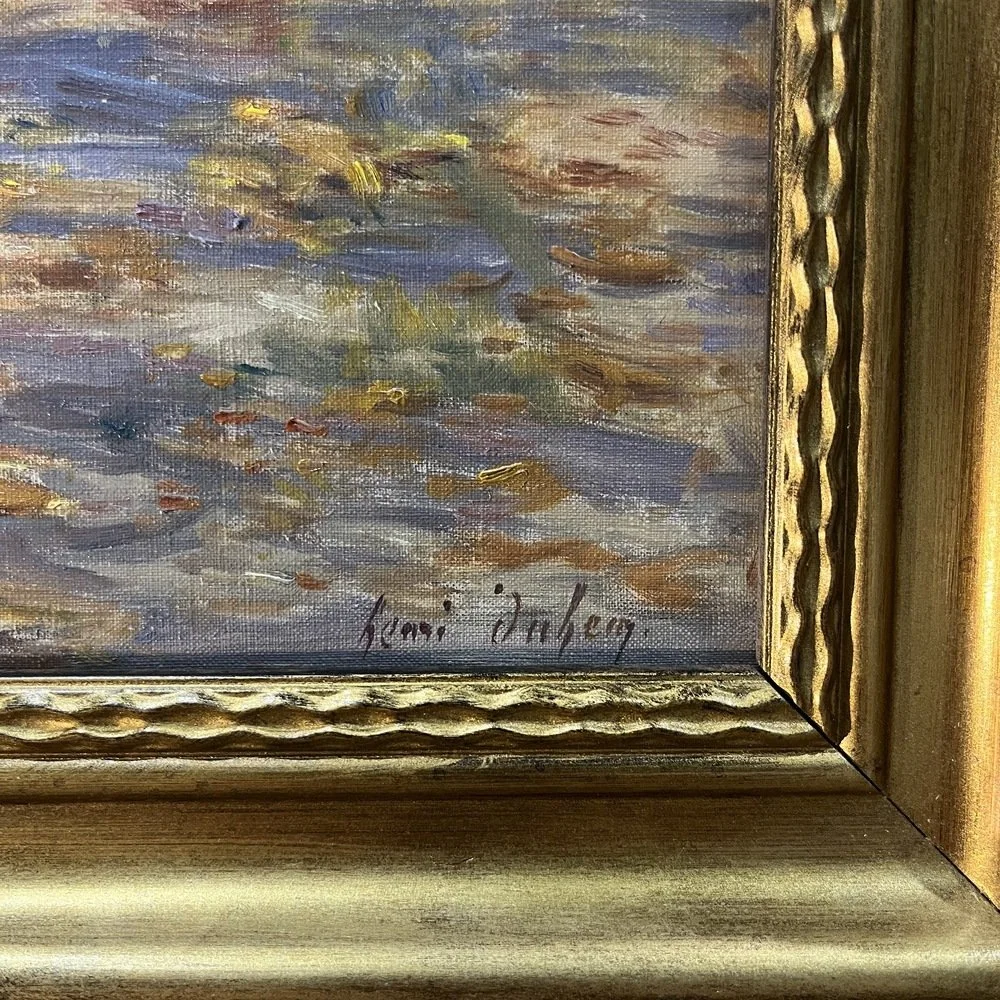 Image 2 of 3
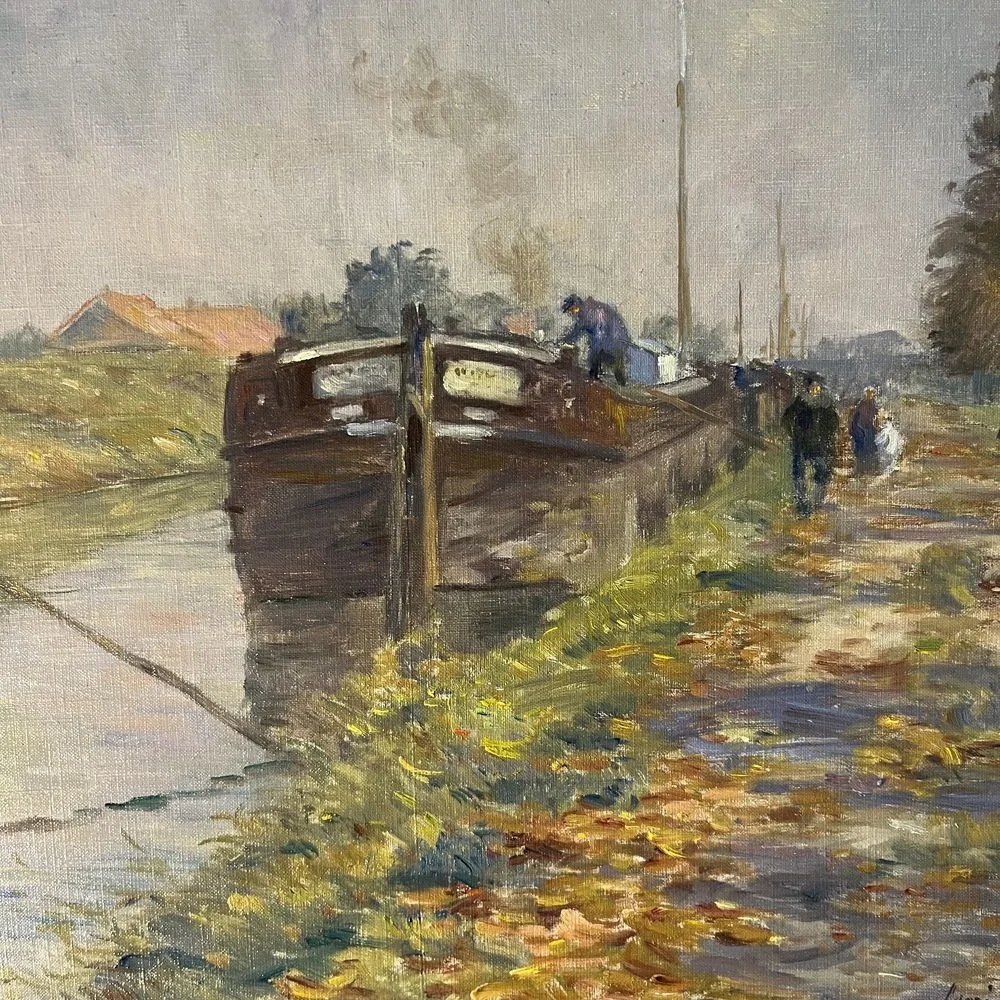 Image 3 of 3
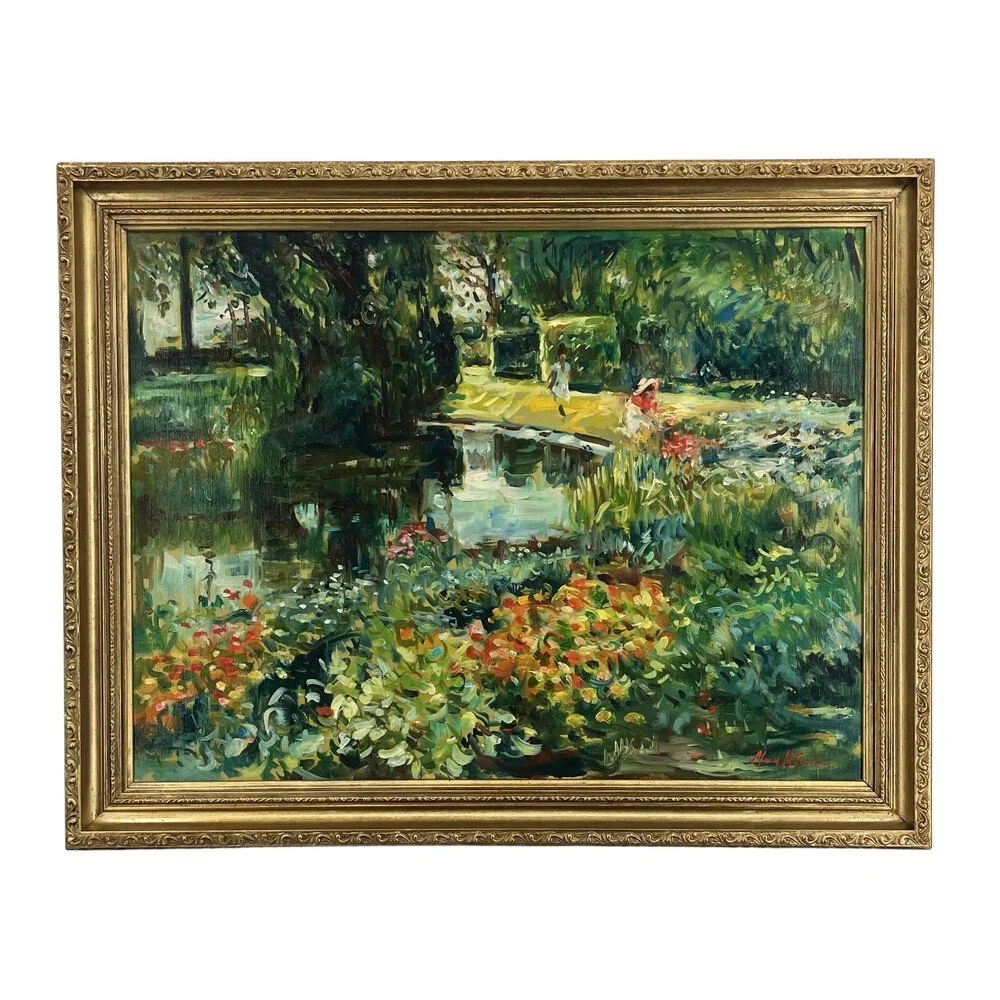
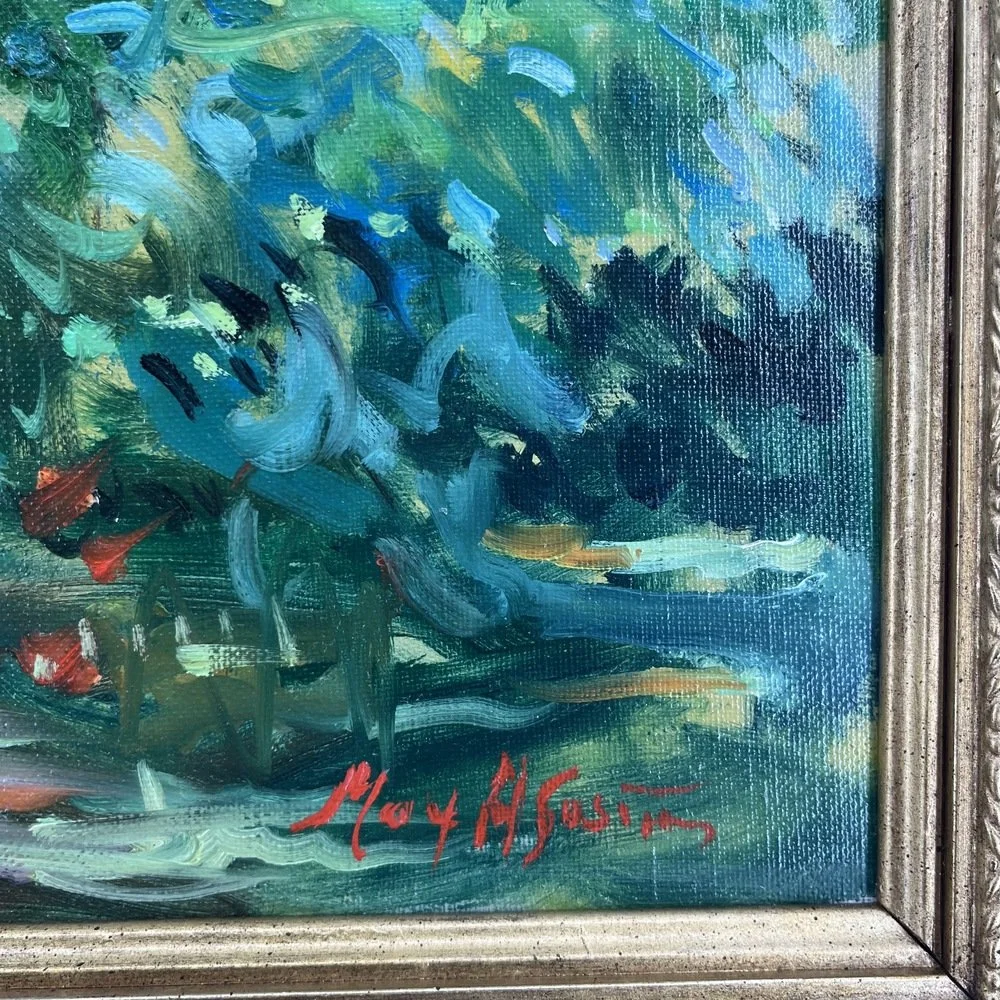
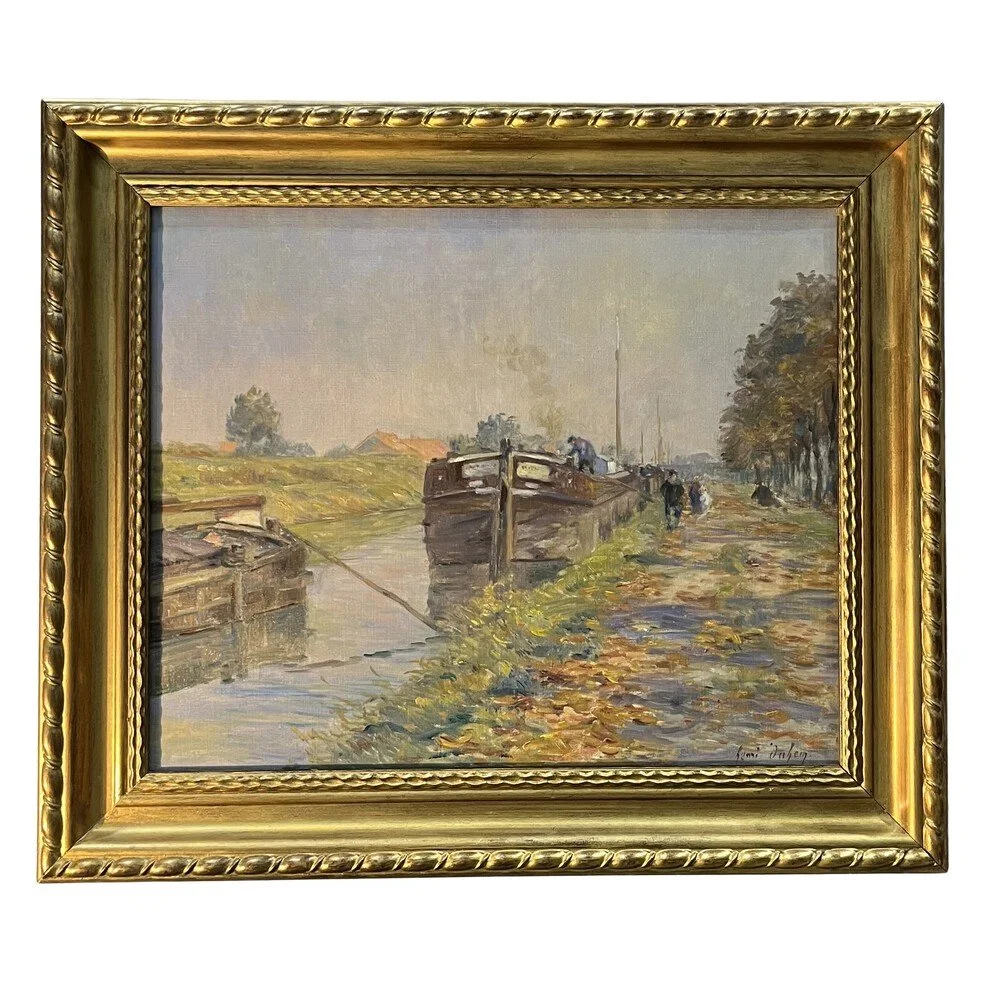
This atmospheric Impressionist oil on canvas, Barges by the River, is by Henri Duhem (1860–1941), one of the important French painters associated with the Impressionist and Post-Impressionist traditions of northern France. Signed lower right and presented in its original frame, the painting captures Duhem’s particular sensitivity to water, atmosphere, and the quiet poetry of the French landscape.
Born in Douai and descended from an old Flemish family, Duhem initially practiced law before turning seriously to art. In 1887 he traveled to Paris to study drawing with the celebrated landscape painter Henri Harpignies, while his friendship with Émile Breton introduced him to oil painting. He married the accomplished painter Marie Sergeant in 1890, and the couple became central figures in the artistic community that gathered around Wissant on the French coast. Georges Maroniez, Francis Tattegrain, and other artists joined them in what became known as the École de Wissant.
Duhem’s artistic reputation grew steadily, and in 1923 he was among the founders of the Salon des Tuileries. His landscapes frequently explore waterways, canals, coastlines, and rural scenes, with a particular emphasis on changing light and atmosphere. The Musée d’Orsay holds his Canal flamand, a large oil on canvas acquired by the museum in 1904—a remarkable early institutional recognition of his work.
A memorable chapter in Duhem’s story is his role not only as a painter but also as an important collector of modern art. Together with his wife Marie, he assembled an exceptional collection that included works by Claude Monet, Paul Gauguin, Camille Pissarro, Renoir, Sisley, and other major artists. Much of this collection ultimately entered the Musée Marmottan Monet in Paris.
Barges by the River is a wonderful example of the quiet, contemplative side of French Impressionism. Its gentle palette and waterside subject would bring a sense of serenity and European history to a traditional, transitional, or collected interior.
Measurements: 20” × 17” framed and 15.5” × 12.5” unframed.
Condition: Good for age.
This atmospheric Impressionist oil on canvas, Barges by the River, is by Henri Duhem (1860–1941), one of the important French painters associated with the Impressionist and Post-Impressionist traditions of northern France. Signed lower right and presented in its original frame, the painting captures Duhem’s particular sensitivity to water, atmosphere, and the quiet poetry of the French landscape.
Born in Douai and descended from an old Flemish family, Duhem initially practiced law before turning seriously to art. In 1887 he traveled to Paris to study drawing with the celebrated landscape painter Henri Harpignies, while his friendship with Émile Breton introduced him to oil painting. He married the accomplished painter Marie Sergeant in 1890, and the couple became central figures in the artistic community that gathered around Wissant on the French coast. Georges Maroniez, Francis Tattegrain, and other artists joined them in what became known as the École de Wissant.
Duhem’s artistic reputation grew steadily, and in 1923 he was among the founders of the Salon des Tuileries. His landscapes frequently explore waterways, canals, coastlines, and rural scenes, with a particular emphasis on changing light and atmosphere. The Musée d’Orsay holds his Canal flamand, a large oil on canvas acquired by the museum in 1904—a remarkable early institutional recognition of his work.
A memorable chapter in Duhem’s story is his role not only as a painter but also as an important collector of modern art. Together with his wife Marie, he assembled an exceptional collection that included works by Claude Monet, Paul Gauguin, Camille Pissarro, Renoir, Sisley, and other major artists. Much of this collection ultimately entered the Musée Marmottan Monet in Paris.
Barges by the River is a wonderful example of the quiet, contemplative side of French Impressionism. Its gentle palette and waterside subject would bring a sense of serenity and European history to a traditional, transitional, or collected interior.
Measurements: 20” × 17” framed and 15.5” × 12.5” unframed.
Condition: Good for age.